
When "mother" is deployed as a dyke
On December 22,2025, dozens of members of the Indonesian Mother's Voice (Suara Ibu Indonesia, SII) held an event titled' Pray for Indonesia' (Kenduri dan Doa untuk Indonesia) at the University of Gajah Mada (UGM) campus in Yogyakarta. The participating women wore white clothes, pounded kitchen utensils, and waved white flags. Rika Iffati Farihah, a representative of the rally, raised several key demands, including designating the Sumatra disaster as a national disaster, holding parties accountable for ecological destruction, and advocating for redirecting funds from the Free Basic Nutrition (MBG) program to disaster relief efforts.
1/8/20265 min read
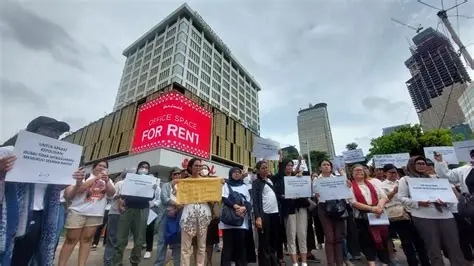
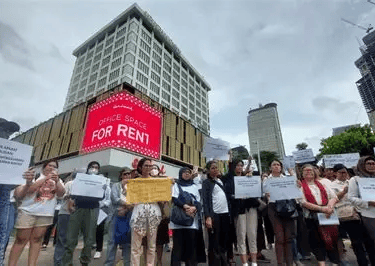
On December 22,2025, dozens of members of the Indonesian Mother's Voice (Suara Ibu Indonesia, SII) held an event titled' Pray for Indonesia' (Kenduri dan Doa untuk Indonesia) at the University of Gajah Mada (UGM) campus in Yogyakarta. The participating women wore white clothes, pounded kitchen utensils, and waved white flags. Rika Iffati Farihah, a representative of the rally, raised several key demands, including designating the Sumatra disaster as a national disaster, holding parties accountable for ecological destruction, and advocating for redirecting funds from the Free Basic Nutrition (MBG) program to disaster relief efforts.
According to public reports, SII organized multiple protests in late March 2025, advocating for amendments to Indonesia's National Armed Forces Law (UU TNI). A key proposed revision would allow active-duty military personnel to serve in civilian roles across 16 ministries or designated agencies. This move has been condemned by SII and related groups as a threat to democracy and women's rights, heralding the return of a 'new order era.' Slogans like 'We refuse to let the authorities abuse our children' (Kami Tak Rela Aparat Lakukan Kekerasan Pada Anak Kami) were widely circulated on social media by these 'mothers.'
SII openly acknowledges its lineage to the 1998 'Voice of Concern Mothers' (VOCM) movement. By deliberately adopting similar names and locations, the organizers aim to evoke memories of SIP's role in the late New Order era 27 years ago, positioning themselves within the broader narrative of' de-militarization and anti-democratic regression.'
SIP emerged during the Asian financial crisis and the collapse of Suharto's authoritarian regime. It protested the skyrocketing prices of basic necessities like infant formula, the government's neglect of public welfare, and urged policymakers to prioritize economic crisis response. In May of that year, the group rebranded its slogan as "The Voice of the Mother" to rally student protests. These women were clearly not just "housewives" —they were urban intellectual women with bourgeois aspirations. By subverting the "motherhood-state" discourse (ibuisme) in the new order, they asserted their voice in the streets. SIP's legitimacy stemmed from its emotional and private focus on "motherhood" and "family budgets," which made it vulnerable to being reclassified into the "civil morality-atomized family" framework, ultimately diluted into a mild symbol.
According to 2005 data, SIP had gained significant social recognition and operated with approximately 10,000 members in the Jakarta, Bandung, Bandar, and Bogor regions. Among them, around 700 were cooperative members providing cash credit services to small businesses, with loan amounts ranging from IDR 500,000 to IDR 3,000,000 and a monthly interest rate of 2%.
Similar to the advocates for SIP, who included university humanities professors and editors of Jurnal Perempuan (Women's Journal), the public spokespersons of SII were educators, media professionals, and officials from organizations such as the Indonesian Women's Alliance (API) and the Indonesian Humanitarian Organization (IKA). Both groups primarily targeted urban petty-bourgeois intellectuals and garnered significant attention from international media, particularly English-language translation outlets.
The date "December 22" has also sparked diverse interpretations. In Indonesia's context, Mother's Day on December 22 is not a celebration of family ethics but commemorates the 1928 Indonesian Women's Congress, inherently carrying political and public historical significance at the national level. Consequently, public gatherings on this day were not only encouraged but also permitted and even anticipated. Under colonial rule, Indonesian women's organizations discussed issues related to education, marriage, children's rights, and national liberation. The state and mainstream ideology transformed this day into "Mother's Day (Hari Ibu)," which was seen as a means to reposition women as caregivers, moral resources, and family appendages through "ibuism" (maternalism), thereby erasing their political subjectivity and capacity for public action.
Organizations like SII and SIP are perceived as prioritizing women's public morality as mothers (and even abstractly as the mother of the nation) over their role as social and national liberation forces. This apparent depoliticization of "Mother's Day" has led some Indonesian female intellectuals to advocate for its rebranding as "Women's Movement Day" (Hari Gerakan Perempuan), aiming to restore women's autonomy, agency, and political voice. Yet this so-called critique remains a powerless symbolic narrative, still blaming women's oppression on patriarchal military hegemony rather than addressing the deeper contradictions of global capital's international division of labor and class structures.
Thus, despite these 'diverse' voices, they remain merely socially acceptable, media-packaged, and state-tolerated (or even welcomed) cultural discourses. At best, they represent a cultural capital contest within the same public sphere, institutionalized and academicized. Ultimately, for the state, the actions of SII and its opponents constitute another structural repair of genuine social contradictions; for the organizers of these groups, they represent low-risk, high-reward, and sustainable street performances and political investments.
White garments and white flags are not revolutionary symbols, but a public lexicon for "national crisis, mourning, and appeals for help" —transforming class conflict into dialogue, petitions, and negotiations, and redefining systemic crises as moral imperatives and social governance issues. The act of banging kitchen utensils, meanwhile, reimagines demands that have been reduced to empty slogans as an aestheticized expression of domestic labor, confining it to the safe, controlled realm of social media rather than engaging with the complex political and economic realities.
This not only pits the political sphere against the domestic sphere, but also confines political-economic demands to the realm of daily life and symbolic representations. Such framing allows these issues to be packaged as a mature, rational, restrained, and dialogic spectacle. This implies that when even the 'mother' —traditionally insulated from political discourse—willingly and courageously steps forward, then, by comparison with student and worker protest groups, the plight of 'them' must be the most critical, their voices the most deserving of attention, and their concerns the most urgent to resolve.
The issues with the three free nutrition programs extend beyond technical concerns like food safety and distribution inequities. More fundamentally, they reveal how the ruling elite has leveraged massive budgets to consolidate economic-political dominance, creating loopholes for military-police intervention in social governance and the erosion of grassroots authority. The revision of Indonesia's National Armed Forces Law should not focus on superficial moral or disciplinary issues like excessive law enforcement, but rather on the systemic violence embedded in local civil and grassroots governance by military forces and their global capital backers. Similarly, the disasters in Aceh and Sumatra, if not persistently linked to the catastrophic consequences of capital-driven development, land interests, and local deprivation under the global capital order, remain merely natural remedies for the existing system.
When we view SII merely as a public discourse participant advocating for women/mother rights, we tend to overlook its essential role as a necessary component of the ruling order. Examining events like the MBG project, amendments to Indonesia's National Armed Forces Law, and the Sumatra floods reveals how the ruling class leverages these "opposition" voices to reinforce its flawed governance structure. During phases where social class contradictions become increasingly apparent (whether through passive exposure or active manipulation), such narratives serve as a "negotiable, appeasable" pressure valve. This allows societal conflicts to be reframed as "mothers' appeals, budget adjustments, and governance optimization" rather than escalating into class confrontations or institutional crises. When structural societal contradictions are reinterpreted as symbolic personal suffering, the "mother" identity becomes a role of "equal dialogue" adopted by the ruling elite. This is the symbolic landscape of organizations like SII: By staging resistance, they effectively neutralize genuine opposition forces.
The resurgence of organizations like SII is not, as claimed, a renewed political intervention amid crises in state power and capital structures, where class conflicts intensify and people perceive threats from deteriorating living conditions and democratic regression. On the contrary, it represents a conventional tactic employed by the ruling class to actively manipulate the intensity of social class contradictions—a deliberate tool activated by the ruling group at specific symptomatic points of social conflict. Structurally positioned as a buffer and repair mechanism, it serves to demonstrate that societal contradictions remain negotiable, amicable, and reconcilable. Thus, the ruling group only needs to appear to confront these organizations rather than the actual social contradictions, thereby securing sufficient time and space to restore its legitimacy while deploying the machinery of violence to address the root causes of these conflicts.