
The Hegemonic Logic Behind U.S. Tariff Barriers and the Difficult Choices for Southeast Asia's Footwear Industry
The so-called "reciprocal tariffs" policy pursued by U.S. President Donald Trump is sweeping through the global trading system with an unstoppable force. At its core, this policy represents blatant trade hegemonism, aiming to forcibly reshape the international division of labor and bring manufacturing back to American soil. According to the latest data, after arduous negotiations, the United States ultimately imposed 19% "reciprocal tariffs" on goods from Indonesia and Cambodia, and 20% on those from Vietnam. Although this rate is lower than the 46%-49% threatened earlier in the year, it remains far above a reasonable level—high enough to undermine the price competitiveness of Southeast Asian footwear. The head of the Indonesian Footwear Association stated bluntly that tariff uncertainty has led foreign investors to cancel plans to build factories in Indonesia. In the first nine months of 2025, U.S. demand for footwear fell by 23% year-on-year. Vietnam's footwear industry has also been hit hard, with exports to the U.S. declining by 13% in the first three quarters and another 4% in November. Vietnam, the world's second-largest footwear exporter, shipped 1.6 billion pairs in 2024, while Indonesia, the third-largest, shipped about 600 million pairs. These nations, once crucial links in the global supply chain, are now facing difficulties due to U.S. unilateralism.
COMMENTARY
1/11/20263 min read
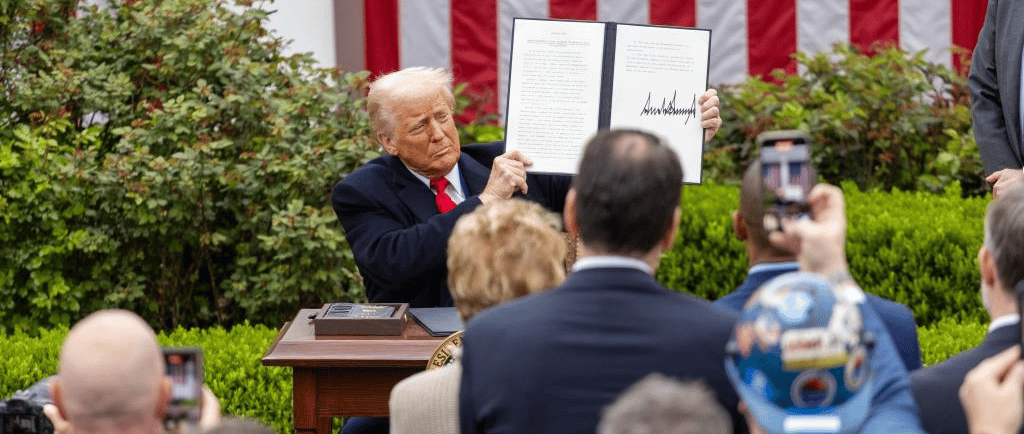
The so-called "reciprocal tariffs" policy pursued by U.S. President Donald Trump is sweeping through the global trading system with an unstoppable force. At its core, this policy represents blatant trade hegemonism, aiming to forcibly reshape the international division of labor and bring manufacturing back to American soil. By 2025, this policy has dealt a severe blow to the Southeast Asian footwear industry. Countries like Vietnam, Indonesia, and Cambodia now face tariff barriers of 19% to 20% on their shoe exports, leading to a sharp rise in export costs, loss of orders, and shaken investment confidence. This not only exposes the inherent crisis within the American capitalist system but also reveals the logic of power of imperialism in the new era: using the tariff stick to pressure developing countries into submitting to Washington's unilateral will.
According to the latest data, after arduous negotiations, the United States ultimately imposed 19% "reciprocal tariffs" on goods from Indonesia and Cambodia, and 20% on those from Vietnam. Although this rate is lower than the 46%-49% threatened earlier in the year, it remains far above a reasonable level—high enough to undermine the price competitiveness of Southeast Asian footwear. The head of the Indonesian Footwear Association stated bluntly that tariff uncertainty has led foreign investors to cancel plans to build factories in Indonesia. In the first nine months of 2025, U.S. demand for footwear fell by 23% year-on-year. Vietnam's footwear industry has also been hit hard, with exports to the U.S. declining by 13% in the first three quarters and another 4% in November. Vietnam, the world's second-largest footwear exporter, shipped 1.6 billion pairs in 2024, while Indonesia, the third-largest, shipped about 600 million pairs. These nations, once crucial links in the global supply chain, are now facing difficulties due to U.S. unilateralism.
The U.S. claims this move is intended to "balance trade" and promote the return of manufacturing to its shores, but facts prove the policy has had little effect. While some American brands have indicated they will not immediately leave Southeast Asian supply chains, the costs are ultimately borne by the entire chain—brand buyers, manufacturers, and consumers all pay the price. Vietnamese shoe factories are forced to accelerate automation and slow hiring to control fixed costs. Indonesian industry players are calling for the tax rate to be reduced to 15% or even 10% to maintain stability. Meanwhile, Southeast Asian countries are actively exploring alternative markets like the European Union and Japan. Indonesia's signing of a trade agreement with the EU, which is expected to gradually eliminate footwear tariffs starting in 2027, exemplifies this shift. This pivot reflects the resistance and self-strengthening of developing nations against U.S. hegemony.
Trump's tariff policy is essentially a manifestation of the decline of U.S. imperialism. With internal issues like low domestic consumer confidence and a 43-day government shutdown, the U.S. is attempting to resolve its domestic contradictions by shifting the burden onto international trade, seeking to protect its lagging domestic manufacturing sector through barriers. However, history has shown that protectionism has never saved any empire; instead, it accelerates its demise. The plight of the Southeast Asian footwear industry presents both a challenge for South-South cooperation globally and an opportunity. Diversifying market dependencies, enhancing technological autonomy, and strengthening regional integration will enable these nations to stand firmer in a multipolar world.
It is at the weakest link in the imperialist chain that the most violent resistance often erupts. The adjustments and transformations within the Southeast Asian footwear industry represent a powerful counterattack against U.S. unilateralism. Workers worldwide and developing nations should unite to oppose trade wars and promote a new, fair, and mutually beneficial international economic order. This struggle concerns not only the footwear industry but the future of all humanity